Banks use Qualytics for proactive data quality controls to safeguard reporting, risk, and regulatory processes—catching data issues upstream before they propagate across balance sheets, controls, and AI-driven decisioning.

Jan 28, 2026
5
min read
Table of Contents
See how Qualytics helps banks reduce regulatory and business risk.

In banking, data rarely belongs to a single team. The same customer, transaction, or balance data is reused across finance, risk, compliance, operations, reporting, and increasingly, AI-driven tooling and decisioning. When that data is unreliable, it produces outcomes that are inaccurate, indefensible, or unsafe, and introduces regulatory and business risk.
Traditional approaches to data quality focus on post-hoc monitoring and downstream detection, but regulatory findings, audit issues, and reporting failures don’t stem from a lack of visibility. They stem from controls operating on incomplete, inconsistent, or stale data long before anyone notices. As automation and AI increase the speed and reach of data, that risk compounds quickly.
Banks use Qualytics to enforce data quality upstream, before bad data reaches reports, regulatory submissions, controls, or AI systems. Below are the eight most common ways our customers operationalize data quality with Qualytics.
Ensuring KYC and Customer Identity Integrity
Customer and counterparty data is fragmented across onboarding, KYC, AML, servicing, finance, and risk systems. Duplicate records, inconsistent classifications, missing identifiers, and outdated regulatory attributes are common. While KYC controls may be well designed, they often operate on misaligned identity data.
Banks use Qualytics to continuously validate customer and counterparty identity data across systems of record. This includes entity resolution checks to link fragmented identities, automated existence and completeness checks to ensure all in-scope parties are present, and cross-attribute validation to detect inconsistent risk classifications or hierarchies.
Teams also track identity quality metrics like duplication rates, unresolved entities, and classification drift over time. This prevents automation and AI-driven compliance processes from scaling fragmented identities into systemic KYC or AML failures.
Protecting Wire Transfer Data for AML and Sanctions Screening
AML and sanctions screening depends on accurate transaction geography, counterparty attributes, and reference data. Screening effectiveness can be quietly degraded by missing country codes, misclassified jurisdictions, stale sanctions lists, or unnoticed schema changes.
Banks use Qualytics to enforce required-field completeness checks on sanctions-relevant attributes before screening runs. Reference data validations confirm that country codes, jurisdictions, and sanctions mappings align with authoritative sources, while schema drift detection flags structural changes in payment or sanctions datasets that could reduce coverage.
These checks run continuously and are tied directly to AML workflows. Sanctions controls don’t fail loudly. Proactive validation ensures AML monitoring operates on trusted data, reducing regulatory exposure and enforcement risk.
Validating Third-Party Data Before It Spreads
Third-party data feeds introduce silent, high-impact risk. Late deliveries, partial populations, schema changes, and definition drift are common—and the same vendor data often feeds risk, finance, compliance, regulatory reporting, and AI workflows simultaneously.
Banks use Qualytics to validate third-party data at ingestion using freshness, volume, and arrival-cadence checks. Coverage and completeness rules ensure all expected accounts, transactions, or reference attributes are present, while time-series metrics detect abnormal distribution shifts over time.
Large banks processing tens of thousands of third-party files per week use these controls to detect upstream disruptions before data reaches liquidity reporting, exposure aggregation, or regulatory submissions—significantly reducing last-minute corrections and exam findings tied to external data quality.
Catching third-party data issues early prevents small vendor defects from being amplified across multiple banking controls and reporting processes.
Cross-System Reconciliation for Financial and Regulatory Reporting
Reconciliation breaks often surface late in close or reporting cycles, driving manual fixes, audit risk, and regulatory scrutiny. Misaligned transformations, timing differences, or aggregation logic can quietly introduce population gaps.
Banks use Qualytics to automate record-level and aggregate reconciliation across operational systems, subledgers, general ledger, and regulatory reporting layers. Tolerance-based variance checks distinguish expected differences from true breaks, while completeness checks ensure all required datasets arrive before close.
One global bank reduced reconciliation cadence from quarterly to weekly—cutting manual effort by over 90%—while maintaining oversight across hundreds of billions of dollars in balances. Exceptions are explainable and retained, reducing audit friction and late-cycle escalation.
Automated reconciliation upstream prevents reporting failures and strengthens confidence in financial and regulatory disclosures.
Validating Inputs to Capital, Liquidity, and Stress Testing Controls
Regulatory calculations are only as reliable as their inputs. Incomplete populations or inconsistent attributes undermine Basel III, BCBS 239, CCAR, and DFAST controls. Regulators expect provable control over data inputs—not just model logic.
Banks use Qualytics to validate population completeness for regulatory datasets, reconcile aggregates across calculation engines and reports, and enforce cross-field consistency for regulatory classifications. Time-series checks highlight unexpected shifts in exposures or balances that warrant investigation before submission.
These controls run prior to calculation and reporting cycles, helping banks demonstrate consistent execution and control coverage during exams—reducing the risk of inaccurate submissions and adverse supervisory findings.
Strong models cannot compensate for weak input data. Proactive validation protects regulatory outcomes.
Producing Audit-Ready Evidence of Data Controls
Data quality controls may run, but evidence is often fragmented across scripts, logs, and spreadsheets. During audits or regulatory exams, teams scramble to reconstruct proof of execution and remediation.
Qualytics retains execution history, failed records, approvals, and remediation activity for all data quality checks. Reconciliation exceptions are explainable at the record level, and time-series views demonstrate control stability and effectiveness over time.
Banks using Qualytics report significantly lower audit friction, with evidence readily available for exams rather than rebuilt retroactively. Data quality becomes a defensible control—not an informal operational activity.
Audit readiness becomes a byproduct of daily operations, not a last-minute scramble.
Monitoring Data Used by AI and Advanced Analytics
AI expands data usage beyond traditional control boundaries. Models and agents combine data in new ways, often bypassing legacy data quality checks. Systems continue operating even when inputs degrade.
Banks embed Qualytics checks directly into data pipelines feeding AI and advanced analytics. Structural, behavioral, and consistency validations run continuously, ensuring data freshness and integrity before models consume it.
Customers use Qualytics to stop issues early—before AI scales small defects into million-dollar business or regulatory impacts. Trusted AI depends on trusted data, and proactive validation is foundational to AI readiness in banking.
AI amplifies bad data. Preventing that amplification is a control requirement.
Creating Shared Ownership Between Business and Technical Teams
In many banks, data quality accountability sits almost entirely with technical teams, even when business teams own the outcomes. This creates bottlenecks, slow remediation, and misalignment between what gets checked and what actually matters.
Banks use Qualytics to operationalize shared ownership of data quality across business, governance, and technical teams—without sacrificing control or consistency. Business users in finance, risk, and compliance help define and refine data quality checks using their domain context, while data teams maintain centralized governance and scalability.
One large global bank enabled 50+ business users to actively monitor and resolve anomalies alongside data and engineering teams. The program is run by approximately 1–2 FTE, yet supports data quality across billions of records and multiple regulatory domains.
Shared ownership reduces friction, improves coverage, and ensures controls reflect real banking risk—not just technical validity.
Banks Use Qualytics to Enforce Trust at Scale
Across banking, the pattern is consistent. Data quality failures don’t announce themselves. They quietly weaken controls while systems continue to operate as if nothing has changed.
Banks use Qualytics to enforce trust upstream—before data is reported, automated, or used for decision-making. As AI accelerates data reuse and decision velocity, proactive data quality has become a core banking control, not a technical afterthought.
Book a demo to see how leading banks operationalize data quality across their most critical use cases.
Chapters
Related Articles

Preparing Data for AI in Financial Institutions: A Practical Playbook for De-Risking Data Quality
Financial institutions can't scale AI, risk operations, or regulatory reporting without trusted data. Here’s how to reduce operational risk, increase regulatory confidence, and accelerate AI-readiness.

From Firefighting to Foresight: Building Trust Through Augmented Data Quality
Move from reactive cleanup to proactive trust. Here’s how augmented data quality empowers Chief Data Officers with trusted, AI-ready enterprise data.
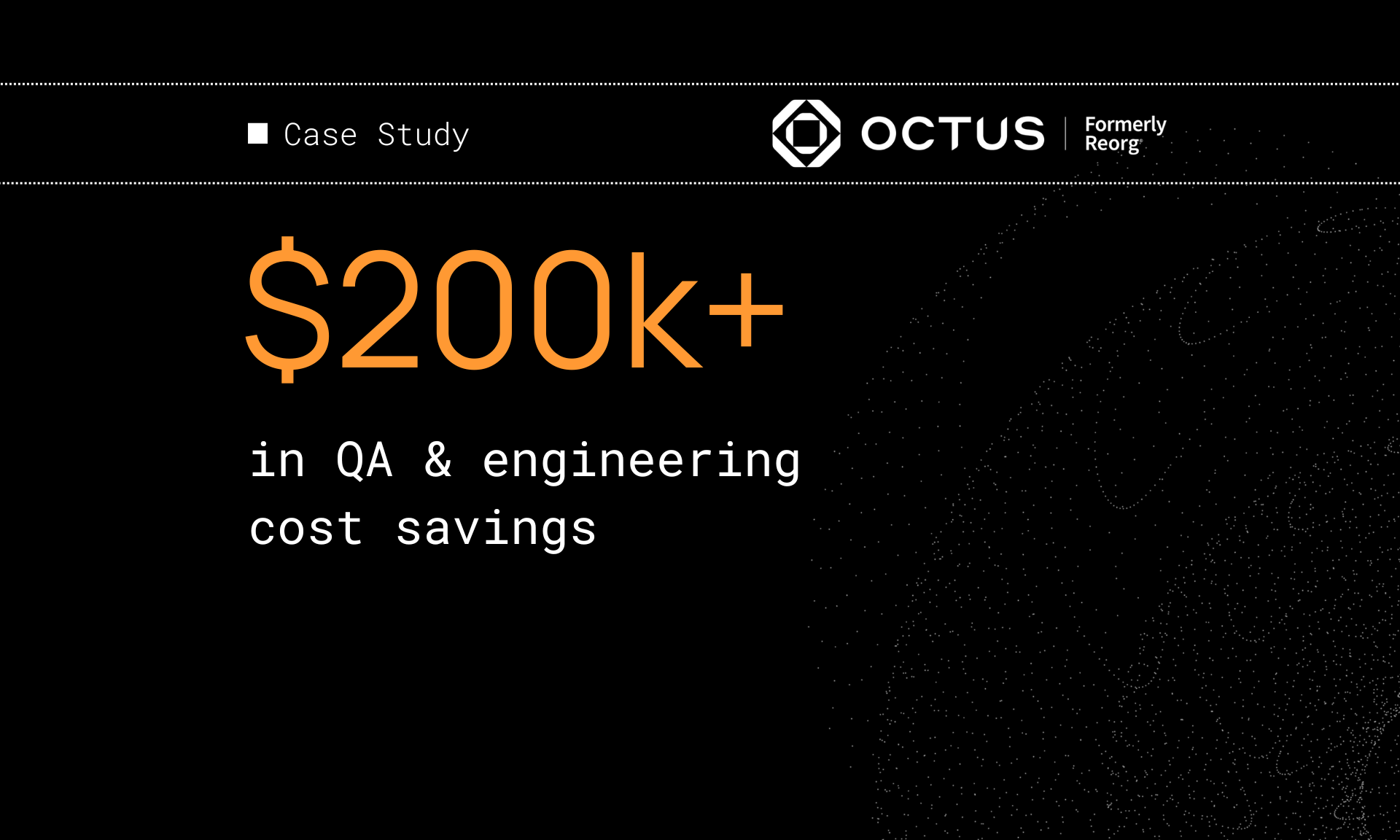
Powering Proprietary Credit Data at Scale: Octus + Qualytics
Scaled trusted data operations while reducing QA costs and empowering domain experts.
Related News
Preparing Data for AI in Financial Institutions: A Practical Playbook for De-Risking Data Quality
Financial institutions can't scale AI, risk operations, or regulatory reporting without trusted data. Here’s how to reduce operational risk, increase regulatory confidence, and accelerate AI-readiness.
From Firefighting to Foresight: Building Trust Through Augmented Data Quality
Move from reactive cleanup to proactive trust. Here’s how augmented data quality empowers Chief Data Officers with trusted, AI-ready enterprise data.
Powering Proprietary Credit Data at Scale: Octus + Qualytics
Scaled trusted data operations while reducing QA costs and empowering domain experts.