Automated reconciliation at scale, reducing manual effort and accelerating financial data confidence.

Feb 12, 2026
2
min read
Table of Contents

The Challenge
Like many large financial institutions, the firm operates across a heterogeneous data environment. While parts of the organization run on modern cloud platforms, many critical financial systems remain legacy, file-based, or lack built-in validation.
According to the VP of Analytics roughly 95% of the systems feeding financial data have no native way to enforce business logic or flag violations. Before Qualytics, that meant errors in the data could slip through undetected until they surfaced in dashboards or executive reviews.
Those “needle in a haystack” issues carried outsized risk. “Most bad records represent a very small percentage of total data, but if those records slip through, they can misinform the business by tens or hundreds of millions of dollars.”
Quarterly close amplified the problem. Each quarter, portfolio companies submit initial end-of-quarter financials, followed by final submissions roughly a week later. Investment and finance teams must review both versions quickly, identify meaningful changes, and assess their implications.
Before Qualytics, this process relied solely on manual comparison:
- Thousands of CSV files reviewed side by side by analysts comparing spreadsheets line by line
- Custom validation logic hardcoded into pipelines and constantly rewritten
- Errors often discovered late in the data lineage
“It was slow, error-prone, and reactive,” the VP explained. “And it wasn’t the kind of work we wanted our team spending time on.”
“I’d walk around the office and see screens with one spreadsheet on the left, another on the right—thousands of submissions being eyeballed across dozens of tabs. At our scale, there’s a better way to do this. Human eyeballs aren’t a systematic solution. The less time it takes to review submissions, the faster we close the quarter—and the happier the executive team is.”
Why Qualytics: Built for Scale, Speed, and Complex Financial Logic
When compared with other tools under evaluation, two of Qualytics’ capabilities stood out:
- High-performance profiling at scale, enabled by Qualytics’ Spark-based architecture
- Enrichment Stores, which preserve row-level context for every anomaly
Speed was non-negotiable. Reconciliation checks needed to run fast enough to be embedded directly into near-real-time pipelines. If results lagged, finance teams would lose confidence and revert to spreadsheets.
Just as important was flexibility. With Qualytics, the team could tag anomalies and decide how to operationalize them downstream—hard-blocking critical failures while allowing softer warnings to flow through with context.
That balance of automation and control made it possible to protect downstream systems without slowing the business.
The Solution
Today, Qualytics sits at the center of the firm’s quarterly reconciliation process. Each quarter-end cycle involves:
- ~40,000 CSV files per day, over a multi-day submission window
- Automated file-to-file data diff checks between initial and final submissions
- End-to-end execution in under two minutes per run
This speed ensures that the moment new data arrives, reconciliation results are immediately available—before analysts feel pressure to manually intervene. “If someone sees a submission but doesn’t see validated results right away, they’ll go straight back to spreadsheets,” the VP noted. “Speed is what makes the system work.”
With Qualytics in place, the team fundamentally changed how financials are reviewed. Submissions that pass defined checks often require no manual review at all. This means analysts can focus only on flagged anomalies, not entire datasets and feel confident that dashboards built from Qualytics outputs are refreshed continuously.
Instead of dozens of analysts scanning spreadsheets, finance teams rely on systematic checks designed for scale. This results in faster close cycles, higher confidence in preliminary numbers, and far less cognitive load during crunch time.
Beyond Reconciliation: Entity Resolution
In addition to reconciliation, the firm uses Qualytics for entity resolution, particularly in accounting and investor operations. Across legal entities and investor names, slight spelling differences previously caused downstream breaks in allocation logic.
Qualytics’ entity resolution checks now standardize those inputs before they propagate. This eliminated a class of issues that previously required custom fuzzy-matching code—work that consumed engineering time without creating new business value.
“As data professionals, we’re told we spend 80% of our time cleaning data,” the VP said. “This lets us spend less time doing that and more time creating value.”
The Results
While the firm has not formally modeled ROI, the impact is clear:
- Near-elimination of manual spreadsheet comparisons during quarterly close
- Reduced reliance on external consultants for data profiling and reconciliation
- Higher trust in preliminary financials, enabling faster decision-making
One internal analytics dashboard powered by Qualytics data now reaches ~300 business users, many of whom never log into the platform directly but benefit from its outputs every day.
Behind the scenes, automated notifications and anomaly tagging ensure issues are routed quickly with full context preserved.
Most importantly, engineering teams are no longer stuck rewriting brittle validation logic. Instead, they focus on building pipelines, improving observability, and advancing analytics and AI initiatives.
Looking Ahead
Embedding Data Quality Across Every Pipeline
Over the next year, the firm plans to further modernize its data program—treating pipelines as reusable products with clear SLAs, observability, and auditability.
Qualytics plays a key role in that vision.
Rather than treating data quality as a separate initiative for each project, the team is embedding Qualytics checks directly into pipelines via API. This makes data quality a default capability, not an afterthought.
“The best part is that we don’t have to think about building a data quality framework every time,” the VP explained. “It’s already there.”
By removing reactive cleanup from the critical path, the organization can focus on what matters most: delivering trusted data, faster, at enterprise scale.
Move From Manual Reconciliation to Proactive Data Quality
This Global Alternative Asset Manager demonstrates how proactive, automated data quality can transform one of the most time-sensitive processes in finance.
By replacing spreadsheet-driven reconciliation with systematic, scalable checks, the firm reduced risk, accelerated close, and freed teams to focus on higher-value work.
Chapters
Related Articles
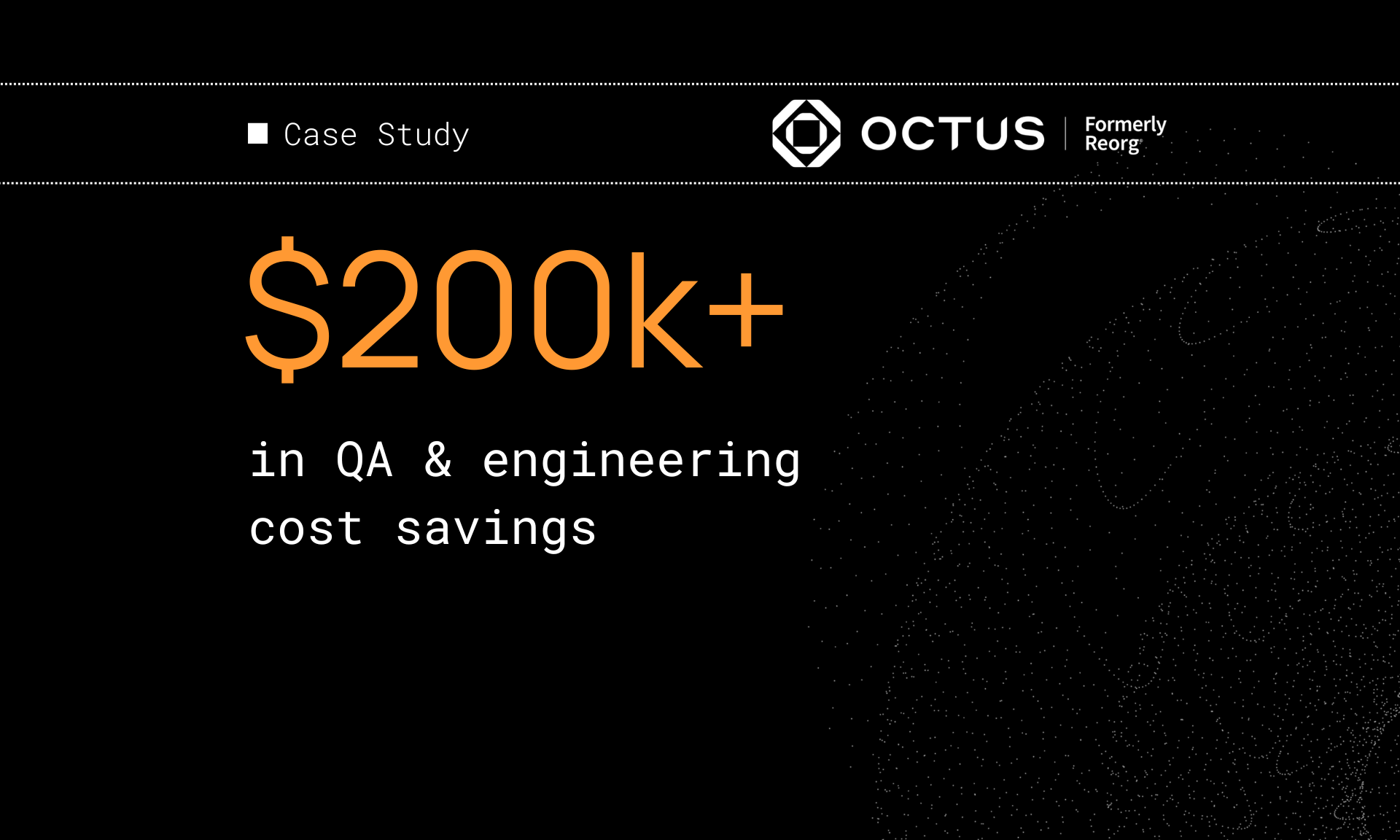
Powering Proprietary Credit Data at Scale: Octus + Qualytics
Scaled trusted data operations while reducing QA costs and empowering domain experts.
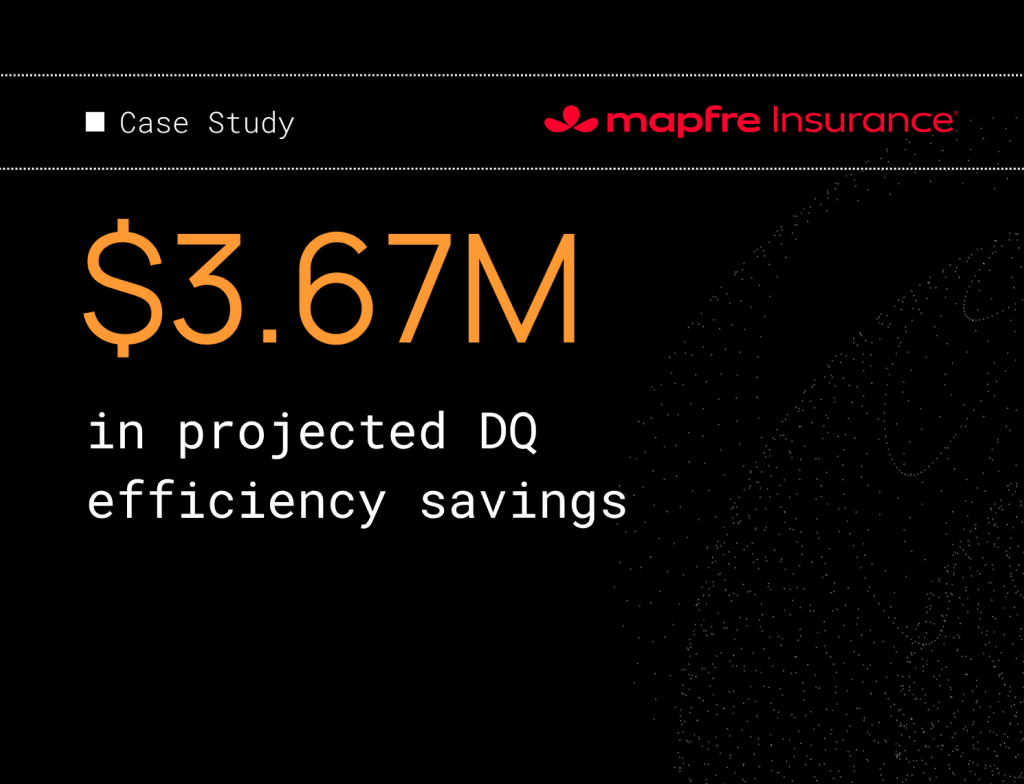
Catching Hidden Data Quality Errors Before They Cost Millions: MAPFRE USA + Qualytics
Shifted from reactive cleanup to proactive controls, preventing costly downstream data errors.

How Asset Managers Scale Data Quality Across Valuation, Close, and Reporting
Asset managers use Qualytics to operationalize proactive data quality to protect NAV, accelerate close, scale reconciliation, and reduce regulatory risk as data volumes, automation, and AI adoption increase.
Related News
Powering Proprietary Credit Data at Scale: Octus + Qualytics
Scaled trusted data operations while reducing QA costs and empowering domain experts.
Catching Hidden Data Quality Errors Before They Cost Millions: MAPFRE USA + Qualytics
Shifted from reactive cleanup to proactive controls, preventing costly downstream data errors.
How Asset Managers Scale Data Quality Across Valuation, Close, and Reporting
Asset managers use Qualytics to operationalize proactive data quality to protect NAV, accelerate close, scale reconciliation, and reduce regulatory risk as data volumes, automation, and AI adoption increase.